The Invasive Species Council has welcomed the Albanese Government’s investment in the future of rabbit biocontrol, saying the $2.6 million Commonwealth contribution towards a $4 million Phase 1 national partnership is an important first step towards protecting Australia’s native wildlife from one of the country’s most destructive invasive species, with further investment needed to complete the program.
Rabbits are one of the greatest causes of species decline in Australia, threatening 322 nationally listed species and causing more than $200 million in agricultural losses every year. But the viruses that have successfully suppressed rabbit populations for decades become less effective over time as rabbits evolve resistance.
‘Today’s announcement is an important commitment to the Australian science needed to continue one of Australia’s greatest environmental success stories,’ Invasive Species Council CEO Jack Gough said.
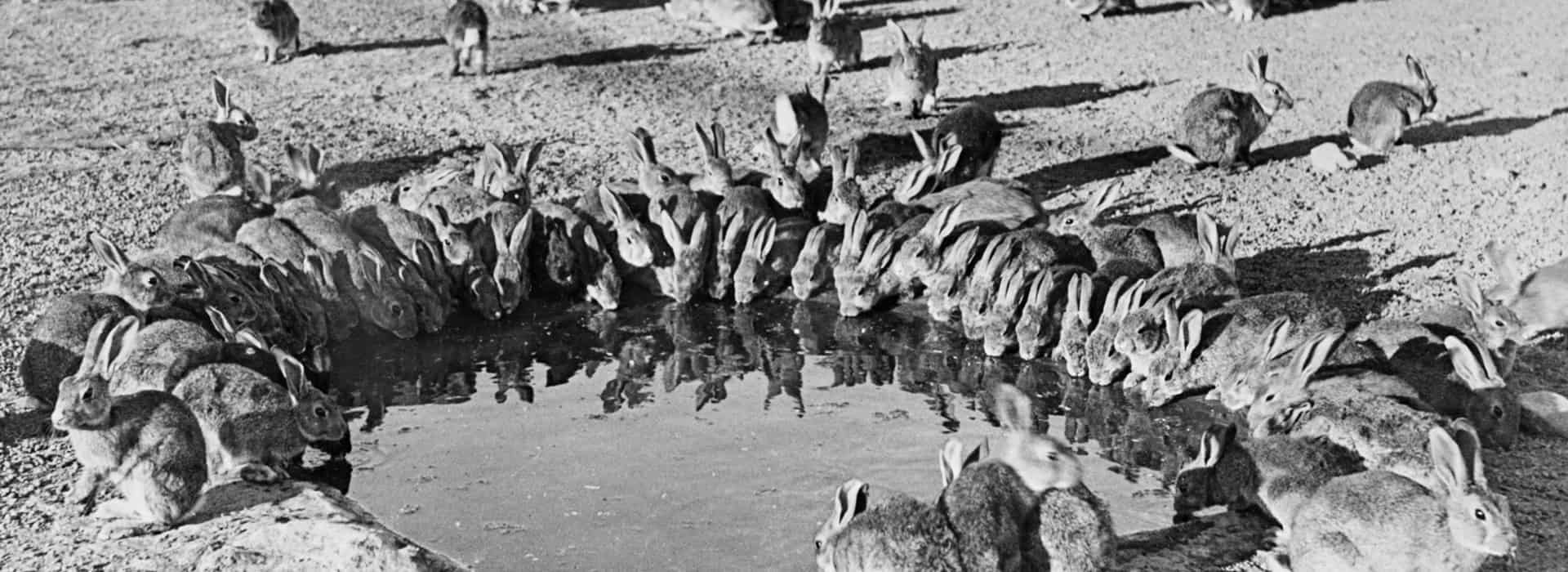
‘There are an estimated 200 million rabbits across Australia right now, stripping landscapes bare, stopping native plants from regenerating, destroying habitat for wildlife and fuelling the decline of hundreds of threatened species.
‘We’re really pleased to see the Albanese Government invest $2.6 million towards the $4 million first phase of this work. We’ve been calling for investment to ensure Australia doesn’t lose one of its most effective invasive species management tools, and this funding gets that process underway.
‘The last rabbit biocontrol was released in 2017 and, as expected, rabbits are gradually developing resistance. We need to stay ahead of that curve, not wait until existing viruses stop working.
‘This is the first phase of a longer-term program, and we’ll continue advocating for the investment needed to complete the later stages and deliver the next generation of rabbit biocontrols.
‘Rabbit biocontrol is one of Australia’s greatest environmental success stories. It has saved countless native animals and plants while reducing costs for farmers and land managers.
‘Biocontrol isn’t the only answer, but it remains one of the most powerful and cost-effective tools we have. Combined with coordinated on-ground control, it gives nature the breathing space it needs to recover.
‘Nature can’t afford for this work to stall. Long-term funding certainty is now essential to ensure Australia can complete the pipeline and continue protecting native wildlife from one of our most destructive invasive species.’
Media inquiries: (02) 8006 5004
Background:
- Rabbits are one of Australia’s most destructive invasive species, threatening 322 nationally listed threatened species and causing more than $200 million in agricultural losses each year.
- There are an estimated 200 million rabbits across Australia.
- Rabbit biocontrol has been one of Australia’s greatest environmental success stories, significantly reducing rabbit populations since the 1950s and helping native wildlife recover.
- The current rabbit haemorrhagic disease virus (RHDV) was released in 2017, but rabbits gradually develop resistance, making continued research essential.
- Today’s announcement includes $2.6 million in Commonwealth funding towards a $4 million Phase 1 national partnership to identify potential new RHDV variants and prepare future regulatory approvals.
- Subject to the success of Phase 1, further investment will be needed to progress virus development, vaccine development, risk assessment and release planning before any future biocontrol can be released.
Photo credit: Mick Williams.
Related Content