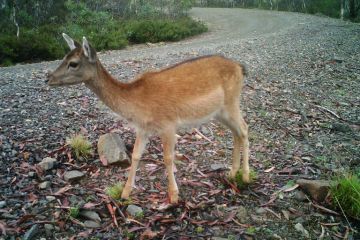
The Invasive Species Council has obtained and released a government report card that was blocked from public release, revealing feral deer are spreading across Australia, with governments failing to contain their range or keep pace with their growing impacts.
The report card is the first since governments endorsed the National Feral Deer Action Plan in 2023, which committed Australia to stopping the spread of large deer populations and controlling or eradicating small, isolated populations before they spread.
Three years on, the assessment shows Australia is off track, with deer distribution increasing across most jurisdictions and deer abundance increasing in Queensland, New South Wales, the ACT and Tasmania.
The leaked National Vertebrate Pest Management Report Card (2026) for feral deer, prepared by state, territory and federal governments, warns feral deer are ‘one of Australia’s most rapidly increasing invasive pests’, driving growing environmental, agricultural and economic impacts.
The leaked report card reveals that over the past five years, deer numbers and distribution increased in Queensland, New South Wales, the ACT and Tasmania, and their distribution increased in Victoria. South Australia was the only jurisdiction to record declining abundance and distribution.
‘This is the first report card since every government agreed to the National Feral Deer Action Plan in 2023, and it tells us very clearly that Australia is off track,’ Invasive Species Council CEO Jack Gough said.
‘A central ambition of that plan was to stop deer spreading into new areas and prevent small populations becoming big ones. Three years later, deer are still spreading across most of the country.
‘Governments agreed on the ambition – now they need to deliver the funding and action needed to achieve it.’
‘In New South Wales, Victoria and Queensland in particular, deer are spreading westwards and opportunities to eradicate isolated populations before they become entrenched are being missed.
‘It is incredibly disappointing that rather than publicly releasing this report and being transparent about the scale of the problem, governments blocked Australians from seeing it.
‘There are bright spots that show what can be achieved when governments match ambition with funding and the right control tools.
‘South Australia is leading the country. Its goal to eradicate feral deer statewide within a decade is delivering real results, with South Australia the only jurisdiction where deer abundance, distribution and both environmental and agricultural impacts are declining.
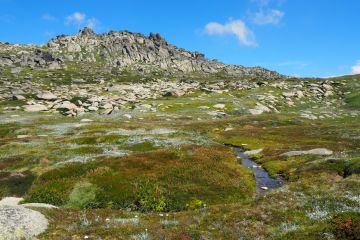
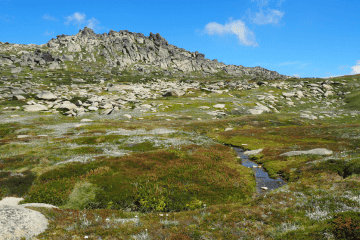
‘The successful eradication of feral deer from the Walls of Jerusalem National Park in Tasmania also shows that we have the tools to get on top of this problem.
‘This report has also landed at a critical political moment, with Victoria heading to the polls next month and a New South Wales election next year, as farmers, communities and conservation groups increasingly call for stronger action on feral deer.
‘We are also at a critical point nationally. The federal government is considering how it funds the management of established pest animals and weeds, and this report makes a compelling case for a major increase in long-term national investment.
‘The states cannot solve this problem alone. We need the federal government at the table with sustained funding that allows governments to eradicate emerging populations and drive down deer numbers across entire landscapes.
‘Governments need to act now while there are still opportunities to eradicate isolated populations and stop deer spreading further. The longer we wait, the harder and more expensive this problem becomes.
‘Australia knows how to control feral deer. What’s missing across much of the country is the sustained investment and action needed to deliver the ambition governments have already agreed to.’
The report found most jurisdictions considered their programs only partially on track to reduce feral deer impacts and abundance, with fewer on track to prevent further spread and incursions.
The Invasive Species Council is calling for a major increase in federal funding for established pest animals and weeds, alongside increased and sustained state investment in feral deer management, with priority given to eradicating small and isolated populations before they spread and expanding coordinated landscape-scale control using the most effective available tools.
The call comes as the federal government considers future funding for established pest animals and weeds ahead of the December budget update.
Media inquiries: (02) 8006 5004
Image credit: Joshua S. Martin
Background:
- The National Vertebrate Pest Management Report Card (2026) was developed by the National Vertebrate Pest Coordinators in collaboration with state and territory government agencies, the Australian Government Department of Agriculture, Fisheries and Forestry and the Terrestrial Vertebrate Working Group.
- The report estimates feral deer cost Australia more than $91 million each year through production losses, management costs and transport impacts. Deer damage crops, pasture and infrastructure, compete with livestock, degrade biodiversity and cultural values, and can pose biosecurity risks.
- Australia has six established feral deer species – chital, fallow, hog, red, rusa and sambar. Populations are well established across south-eastern Australia, while South Australia and Western Australia have smaller, more localised populations and the Northern Territory has a small number of low-density populations.
- More than 2.6 million hectares of public and private land were subject to feral deer control in 2024–25, with more than 32,000 deer removed through targeted aerial culling programs. The report identifies aerial control, including thermal-assisted aerial shooting, as the most effective method for reducing feral deer populations at landscape scale.
- Thermal-assisted aerial culling is increasingly being adopted across Australia and has been central to South Australia’s statewide deer eradication program.
- The report concludes that reducing feral deer impacts will require coordinated landscape-scale control, stronger partnerships, improved monitoring and reporting, and sustained investment in early intervention and community-based programs.
Related Content