The Invasive Species Council has welcomed a decision by the Inspector-General of Biosecurity to launch an independent review into the biosecurity failures exposed by the recent fire ant incursion at Sydney’s Enfield freight terminal.
The decision comes just days after the Invasive Species Council wrote to Inspector-General of Biosecurity Dr Melissa McEwen and federal Agriculture Minister Julie Collins calling for an urgent independent review of the Enfield incursion and surveillance arrangements at freight-handling facilities around Australia.
The interim review will use the Enfield incursion as a case study to examine biosecurity risk management at Commonwealth-approved arrangement sites, including surveillance and assurance arrangements.
‘We are very pleased the Inspector-General and the government have listened to our calls for an independent review of the Sydney fire ant incursion. What happened at Enfield raised serious questions about whether some of Australia’s biosecurity surveillance arrangements are fit for purpose. Systems for managing surveillance at sites like this must now be put under scrutiny,’ Invasive Species Council Advocacy Director Reece Pianta said.
‘This is exactly the kind of review Australia needs – one that looks beyond what happened at a single site and asks whether the rules, risk ratings and surveillance arrangements designed to protect Australia from invasive species are actually working.
‘At Enfield, a mature fire ant nest may have been present for 12 months or more, despite the site being compliant with Commonwealth requirements.
‘We learned that the business where the nest was found was only required to check fire ant lures once every three years, while other businesses operating under Commonwealth-approved arrangements at Enfield were required to check annually and had not done so since January.
‘This interval simply does not match the biology of fire ants, which can reach reproductive maturity in around six months and spread before the next scheduled surveillance check.
‘The fact the Inspector-General has made Enfield the first phase of this much broader examination of Australia’s biosecurity system shows how seriously these questions need to be taken.
‘Queenslanders already know just how destructive fire ants can be. They threaten our wildlife, agriculture and way of life, and governments are spending hundreds of millions of dollars trying to eradicate them from south-east Queensland.
‘We cannot afford weaknesses at our borders and freight gateways to give fire ants another pathway into Queensland or allow new incursions to establish elsewhere in Australia.
‘When a breach exposes a potential weakness in our defences, we need to learn from it quickly and fix the system rather than wait for the next invasive species to slip through.
‘We look forward to working constructively with the Inspector-General and seeing strong recommendations that make our biosecurity system safer.’
The Inspector-General’s work plan says the Enfield review will examine documentation and data and include field work, with a draft report due to the Department of Agriculture, Fisheries and Forestry for fact-checking in February 2027. A final report will go to the department secretary in March and is scheduled for public release in April 2027.
Media inquiries: (02) 8006 5004
Photos and videos available here.
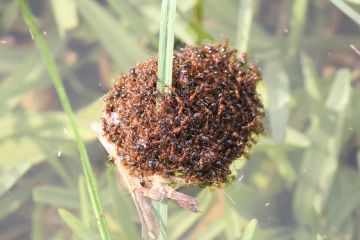
Image credit: Barry Rice
Background:
- The Inspector-General has previously raised concerns about the system governing approved arrangements. A 2019 review found limited or occasional regulatory oversight and recommended unannounced, risk-based audits and year-round compliance oversight. A separate 2018 review warned that increasing rail movements from ports to intermodal hubs around Sydney and Melbourne increased the risk of contaminated containers spreading hitchhiker pests.
- A 2025 Inspector-General review found two recommendations from the 2019 review remained open and identified persistent weaknesses in how recommendations were implemented.
- Fire ant colonies can reach reproductive maturity at around six months, meaning a 12-month checking interval could allow a colony to mature and spread before it is detected, while a three-year interval could allow repeated rounds of spread.
- Fire ants can be lethal to humans, are expected to have a $2 billion per year impact on Australia’s economy if they get out of control, will devastate wildlife, cut agricultural output by up to 40% and may cause over one hundred thousand extra medical appointments each year.
- Red imported fire ants could cause 650,000 additional medical appointments every year if they are allowed to spread unchecked across Australia.
- Fire ant stings carry an anaphylaxis rate nearly three times higher than common stinging insects like bees.
- Fire ants can form rafts during flood events, stowaway in freight or soil or spread by Queen ant flights of around 5 km per year (and up to 30 km in favourable conditions).
- Fire ant colonies can reproduce after at least six months. These reproduction events can infest freight and this has been a cause of detections, including those in the Northern Rivers region.
- The current national fire ant eradication program is funded until June 2027.
- Recently, agriculture ministers from across the country made a united commitment to keep fire ant eradication on the table, saying the next critical test is whether state, territory and federal treasurers will fund the plan.
- A proposed Response Plan 2027–32 would continue the eradication effort over the following five years, subject to funding commitments from Australian, state and territory governments.
- More than 95% of Australia is suitable for fire ant infestation.
Related Content