The Australian Government is being urged to abandon plans to reopen widespread live parrot imports, with conservationists warning the move could expose two of Australia’s most iconic endangered cockatoos to new and potentially deadly diseases.
In a submission on draft national recovery plans for the gang-gang cockatoo and south-eastern red-tailed black cockatoo, the Invasive Species Council has warned both plans fail to adequately address the threat posed by novel wildlife diseases, as the Department of Agriculture, Fisheries and Forestry considers lifting a 30-year restriction on widespread live parrot imports.
Gang-gang cockatoos, found across southern NSW, the ACT and Victoria, suffered major population losses in the catastrophic 2019-2020 bushfires.
The south-eastern red-tailed black cockatoo is in an even more precarious position, with just one population of an estimated 1200–1500 birds remaining across south-western Victoria and south-eastern South Australia.
Both species are already threatened by existing diseases – like H5 bird flu and psittacine beak and feather disease. But their draft recovery plans focus on just these two diseases, despite many new potentially dangerous novel parrot diseases being identified by scientists in recent years.
‘We support the recovery plans addressing the threats posed by H5 bird flu and psittacine beak and feather disease. But if they are going to secure the long-term future of these endangered cockatoos, they need to look beyond just two diseases. That means accounting for the much broader range of known and emerging pathogens, and focusing on preventing new diseases from reaching these vulnerable populations in the first place.’ Invasive Species Council Senior Policy Analyst Claire Bookless said.
‘The Australian Government is developing recovery plans to save these beautiful cockatoos while considering reopening a pathway that could expose them to new and potentially deadly pathogens.
‘Gang-gangs and south-eastern red-tailed black cockatoos are already fighting for survival. They currently face threats from habitat loss, bushfires, existing diseases and H5 bird flu. The last thing they need is another preventable disease threat.
‘We cannot prevent H5 bird flu arriving in Australia with migratory birds, but we can prevent other new diseases being brought here through human-created pathways like the live pet and aviary bird imports.
‘The south-eastern red-tailed black cockatoo is down to a single population of fewer than 1,600 birds. For a population already that small, and slow to reproduce, a new disease outbreak could be catastrophic and irreversible.
‘The last time Australia allowed widespread live parrot imports, two novel pathogens known to cause fatal disease entered the country despite quarantine.
‘One of those, parrot bornavirus, is described by the Department of Agriculture, Fisheries and Forestry itself as one of the greatest threats to endangered parrots.
‘That history should be warning enough. Quarantine is not failsafe, particularly for diseases that can be carried by apparently healthy birds or are difficult to test for.
‘Scientists are continuing to discover new parrot viruses and new variants of known diseases around the world. We simply cannot know what the next disease threat will be.
‘Australia’s biosecurity system should take a precautionary approach when the stakes are this high. Once a new wildlife disease establishes here, there is no putting it back in the box.
‘Environment Minister Murray Watt should remove all parrot species from the Live Import List and ensure Australia does not reopen this unnecessary pathway for new pathogens.
‘Australia is the evolutionary heartland of parrots and cockatoos. We should be protecting these remarkable birds from preventable threats, not gambling with their future.’
The Invasive Species Council’s submission calls for both recovery plans to explicitly recognise a much greater range of novel pathogens, including new variants of diseases already present in Australia, as a threat to these cockatoos.
It also calls for stronger surveillance for emerging parrot diseases and for serious diseases including psittacine beak and feather disease, Pacheco’s disease and proventricular dilatation disease in threatened parrots to be added to the national list of Notifiable Animal Diseases.
The submission also calls for all parrot species to be removed from the EPBC Act Live Import List, closing the door on the proposed resumption of widespread live parrot imports.
Media inquiries: (02) 8006 5004
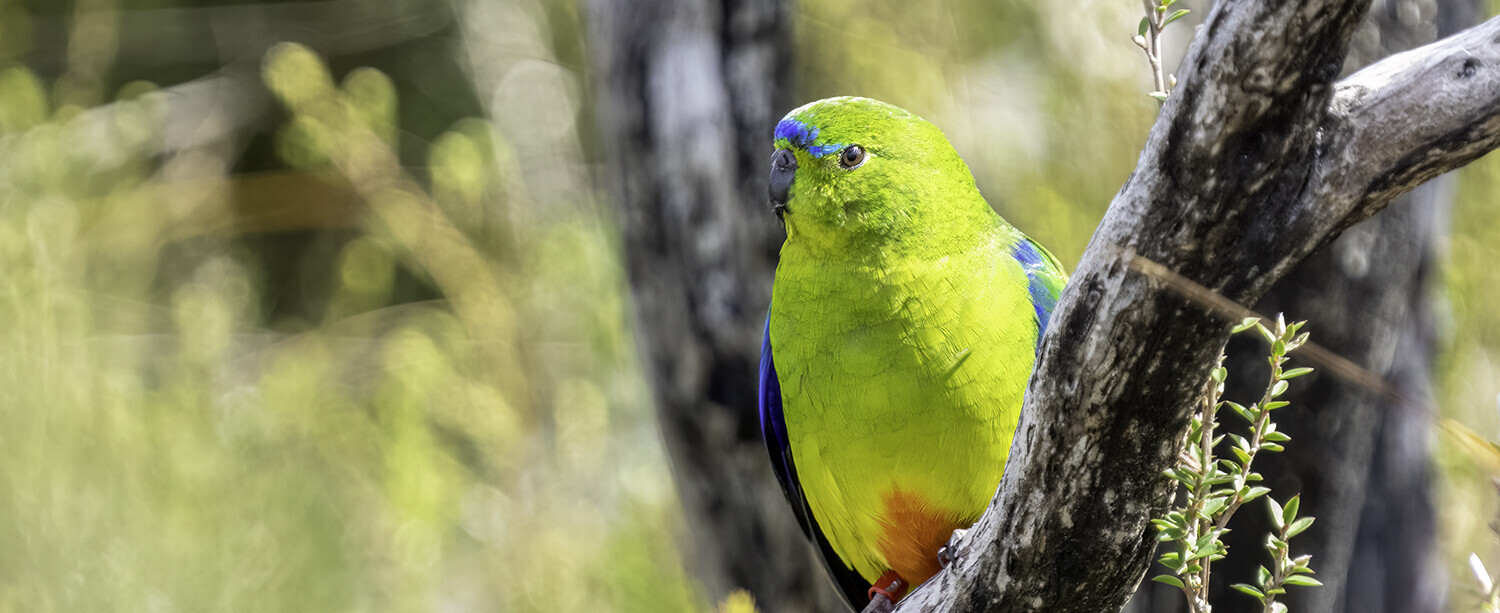
Image credit: Astrid Osborne.
Image credit: John Cull.
Background:
- The gang-gang cockatoo is listed as endangered following a rapid population decline, with an estimated 17,600–35,200 mature birds remaining after catastrophic losses in the 2019–2020 bushfires.
- Other invasive species threats identified for gang-gang cockatoos include competition for nesting hollows from feral honeybees and starlings, and weed and disease invasion of foraging and nesting habitat.
- The south-eastern red-tailed black cockatoo consists of a single nomadic population of approximately 885–1,545 birds, confined to less than 18,000 km² of south-western Victoria and south-eastern South Australia. It is rated as facing a ‘high’ risk from psittacine beak and feather disease.
- Other invasive species threats to south-eastern red-tailed black cockatoos include weeds invading foraging habitat, including pines spreading from plantations, and grazing pressure on foraging habitat from stock and rabbits.
- Both draft recovery plans recognise psittacine beak and feather disease and highly pathogenic avian influenza as disease threats, but their proposed actions focus largely on monitoring and responding after disease is detected.
- The Department of Agriculture, Fisheries and Forestry is proposing to allow parrots for pet-keeping and aviaries to be imported into Australia from countries beyond New Zealand for the first time since 1995.
- During the last period of widespread live parrot imports, from 1990–1995, approximately 4,800 birds were imported. Two novel pathogens known to cause fatal disease – parrot bornavirus (the cause of proventricular dilatation disease) and psittacid herpesvirus-1 (the cause of Pacheco’s disease) – were subsequently detected in Australia despite imported birds undergoing quarantine. Pacheco’s disease has since been detected in wild Australian parrots.
- The submission warns that reopening live parrot imports could expose both endangered cockatoos to novel pathogens and novel variants of diseases already present in Australia.
Related Content