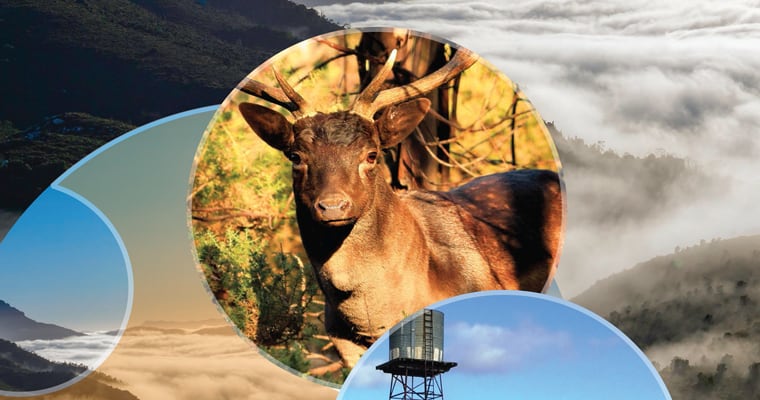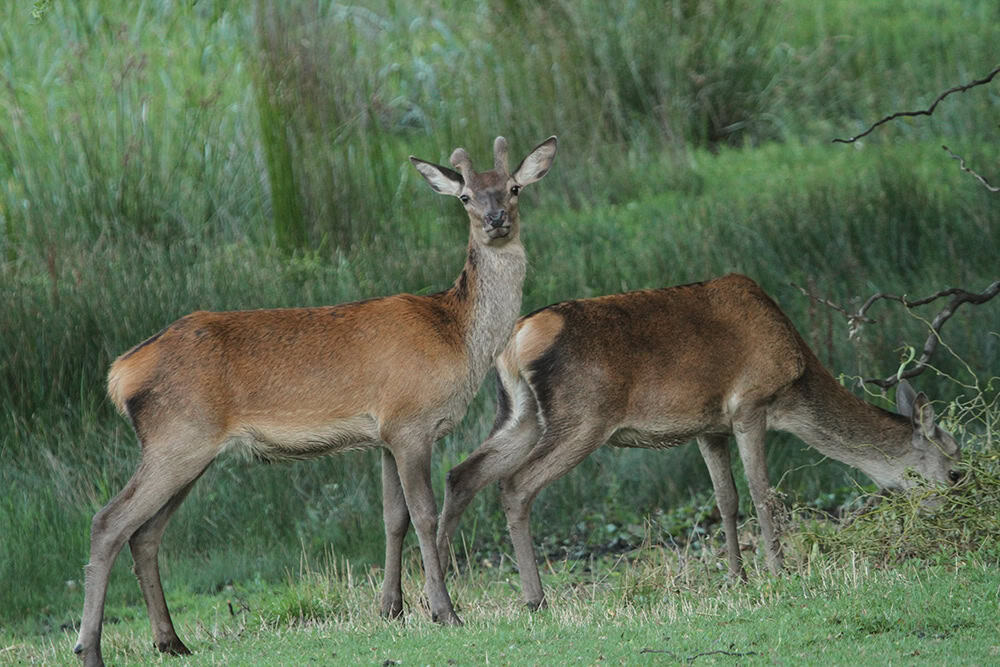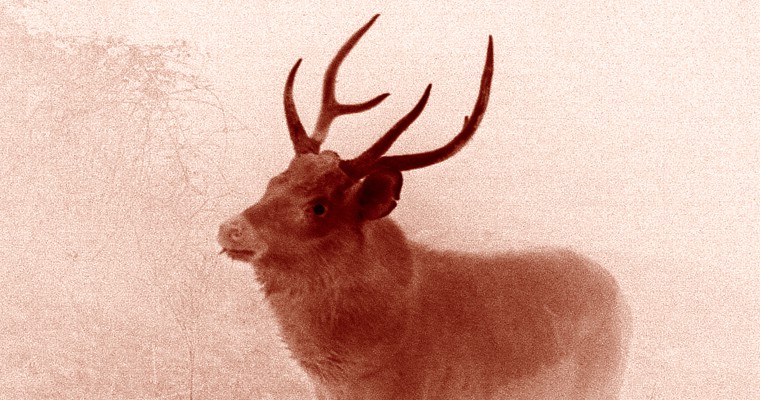
The Invasive Species Council is encouraging the state government to make the most of the opportunity to remove feral deer from Deep Creek National Park, as part of its recovery plan from the bushfire that burnt thousands of hectares earlier this year.
Around 40% of the park – more than 4,500 hectares – was burnt in February 2026, leaving fragile landscapes exposed and highly vulnerable to damage from invasive species.
‘The months after a bushfire are among the best times to control feral animals, which congregate in the few remaining areas where feed is available. The open landscape makes it easy to locate feral animals and to use humane control methods such as aerial control to quickly reduce their numbers,’ Invasive Species Council Senior Advocate James Johnston said.
‘We are deeply concerned that we are seeing evidence already of feral deer within the bushfire recovery areas doing irreparable damage to this fragile environment.
‘Currently, the park is closed 1 week per year for Pest Control, which is coming up later this month.
‘Populations of feral deer have been stubborn to knock down historically here. Evidence shows that you have an 18-month window to make the most of bushfire recovery to knock down invasive populations.
‘To capitalise on this opportunity, we encourage the state government to double its efforts and deploy additional resources while this window is still open.
‘This could involve either deploying an extra helicopter or additional ground personnel in May. Alternatively, dedicating an additional week later in the year in the spring.
‘We have an opportunity to knock populations down more than in previous years, and the government would be remiss to let it pass.
‘We have been here before as a state – with the recovery after the Kangaroo Island fires, the government took the opportunity to remove remaining feral species and now we are heading towards a feral-free island.
‘Let’s replicate this in one of our most iconic national parks, Deep Creek, which has critical habitat to some of this state’s most endangered species – including the endangered western firetail.
‘We are encouraging the South Australian government to deploy extra resources to this program and make the most of this opportunity.’
Media inquiries: (02) 8006 5004
Related Content