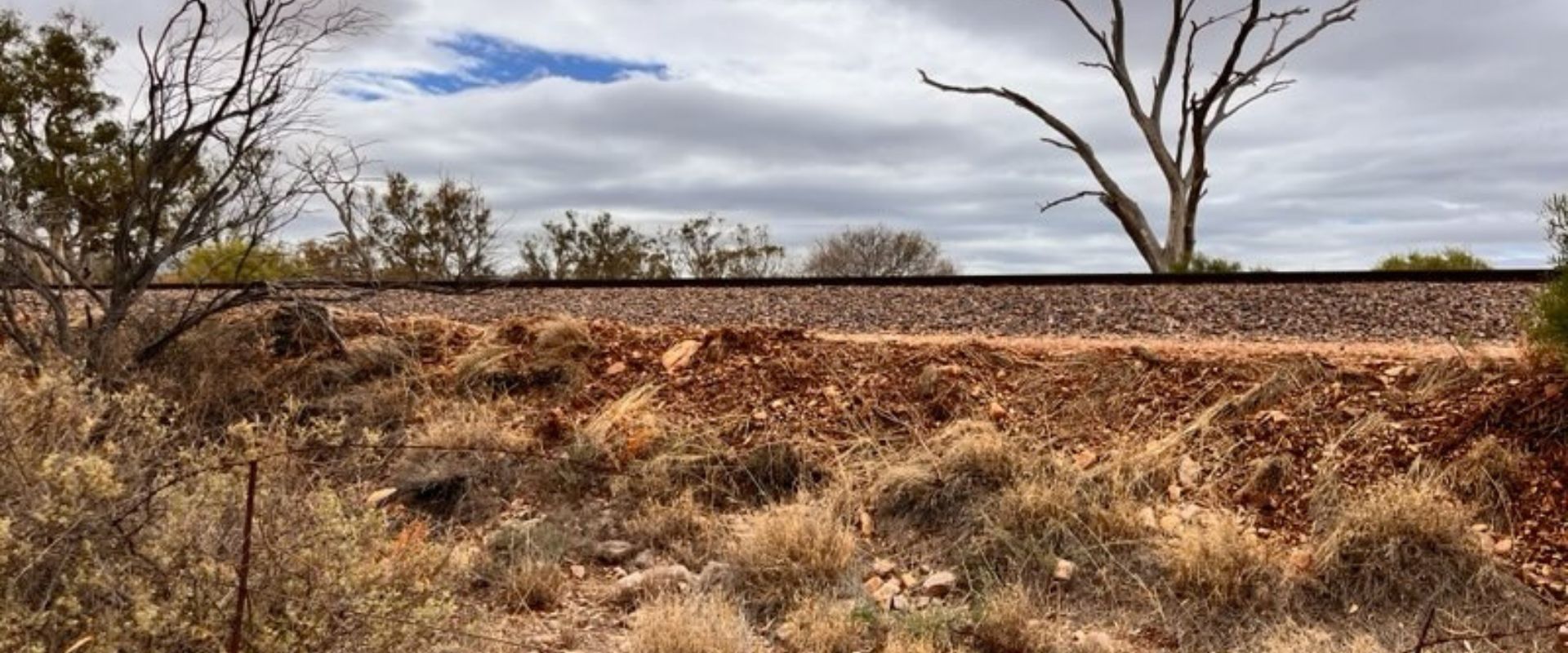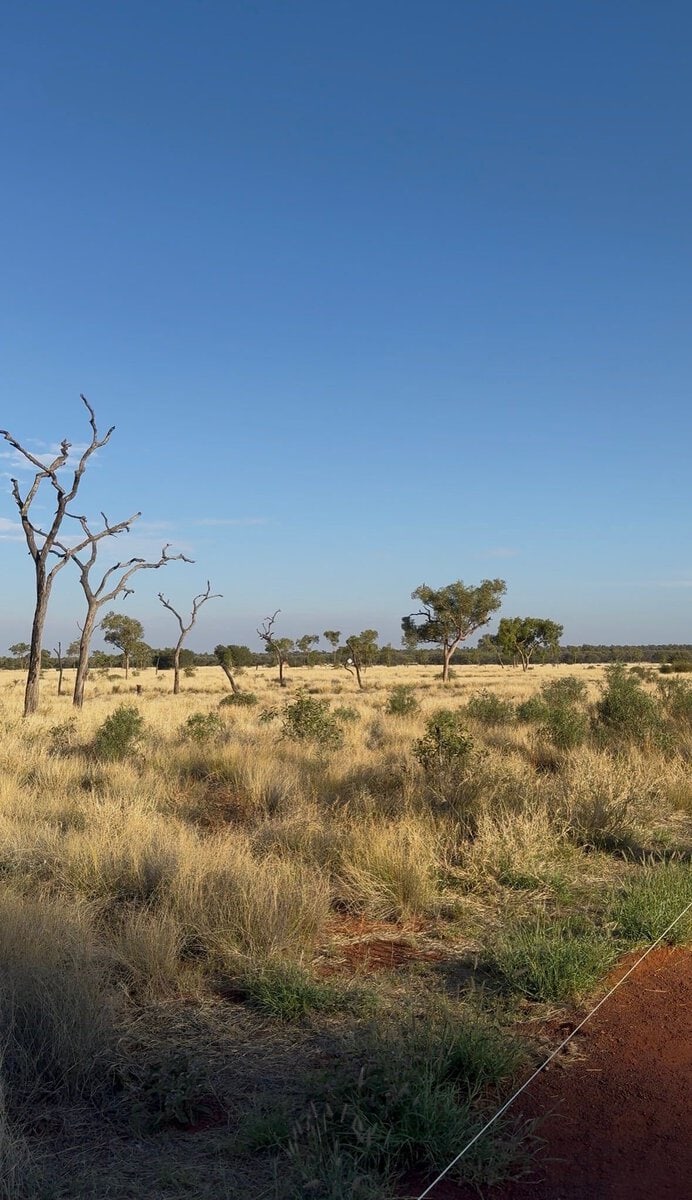
New satellite images released by NASA showing Australia’s Red Centre turning green should not be mistaken for good news, the Invasive Species Council has warned, with much of the growth likely to be invasive buffel grass – a fast-spreading weed that is priming the landscape for future bushfire disasters.
Recent rainfall has seen buffel growth explode across Central Australia and Arid regions, and while it looks lush and green now, it is next bushfire season’s fuel.
The warning comes as new research highlights buffel grass is spreading deeper into central Australia, with high-resolution mapping showing the invasive weed rapidly colonising river systems, floodplains, rocky ranges and even landscapes once thought resistant to invasion.
Invasive Species Council Voice of Country program lead Taigen Ryan said invasive grasses like buffel are taking over Central Australia and have catastrophic consequences for the environment, community and culture.
‘The orbital imagery is a warning sign of an unfolding catastrophe – what we’re seeing from space is a surge in plant growth, much of it likely invasive buffel grass, and when this dries out, it becomes vast loads of fuel, turning the heart of our country into a tinderbox.
‘Buffel grows fast, dies back, and leaves behind huge loads of dry biomass. That’s today’s green becoming next bushfire season’s catastrophe.
‘Buffel creates continuous fuel loads where there once were natural fire breaks. When it burns, it burns hotter, faster and more frequently than these landscapes have ever experienced.
‘Recent research has mapped buffel grass spreading into vast areas of central Australia, including habitats once thought resistant to invasion, highlighting its ability to rapidly colonise new areas, outcompete native plants and dramatically increase fire risk.
‘In places like Tjoritja, buffel has already helped drive devastating fires that have burned more than 100,000 hectares of country, damaged biodiversity and scarred places of deep cultural significance.
‘We are calling on the federal government to urgently list buffel grass as a Weed of National Significance and invest in coordinated national action to map, contain and reduce its spread before the next fire season.’
Alex Vaughan, Policy Advocacy Coordinator, Arid Lands Environment Centre, said:
‘This explosive neon green buffel grass growth across inland Australia is the canary in the coalmine.
‘A devastating fire season is coming with significant consequences to public safety, infrastructure, cultures and environments across the region.
‘Right now, the impacts of buffel grass invasion across the red centre is an absolute disaster.
‘This is the red centre, not the green centre. Clearly it’s not just a local issue, it’s at a scale that can be seen from space, changing the face of the Australian deserts.
‘This is the cycle we are now locked into: rain brings a burst of growth, buffel takes over, and then the landscape is set up to burn more frequently and destructively than ever before.
‘If we don’t get serious about tackling invasive species like buffel grass, these green flushes will keep turning remarkable places from the Victorian Mallee and Kati Thanda- Lake Eyre to Uluru-Kata Tjuta, Alice Springs and Australia’s 10 Deserts into blackened landscapes.
‘A Weed of National Significance listing for buffel grass is a vital opportunity to recognise the existential impacts posed by buffel grass invasion, to come together collectively and make a plan to minimise harm to communities, environments, cultures and economies across the nation. We cannot keep avoiding this existential issue!’
Media inquiries: (02) 8006 5004.
Background:
Environmental impacts of buffel grass
- Fuels hotter, bigger and more frequent fires, and outcompetes native vegetation with its rapid growth. Buffel-invaded areas can contain up to 5 times more biomass than native grasslands.
- Simplifies the structure and composition of plant and animal communities, primarily through the impacts of fire. Diverse native plant communities are being replaced by buffel monocultures. Central Australia is losing big old river red gums that provide hollows for dozens of bird and bat species.
- Has been linked to catastrophic wildfires, including in Tjoritija/West MacDonnell National Park, and the 2023 disaster on Hawaii’s Maui island.
- Recognised in the conservation advice and/or recovery plans of at least 31 federally listed threatened species. Also a threat to Ramsar sites and properties on the World Heritage List (Read et al 2020).
- Vast areas of Australia are vulnerable: >70% Australian has been assessed as suitable for growth of buffel.
- All sorts of habitats are vulnerable, including riparian areas, wetlands, springs, floodplains, sand dunes, rocky hills, grasslands, woodlands, islands, towns
Social, cultural and economic threats of buffel grass
- Assessed as the greatest invasive threat to cultural values for First Nations people in central Australia. Damages cultural and sacred sites, causes loss of bush foods and bush medicines, undermines traditional fire management.
- 28 Indigenous protected areas (IPAs) are currently invaded or at risk of future invasion.
- Presents a safety risk to communities due to the extensive contiguous fuel load and increased risk of widespread fires.
- Threatens future economic development, the integrity of critical infrastructure and expansion of the hydrogen, renewable energy and rare minerals sectors through the impact of fire, management costs and potential interruption of key road and rail transport networks.
- Places an increased strain on fire fighting volunteers, with potentially disastrous consequences for a growing number of communities.
Related Content