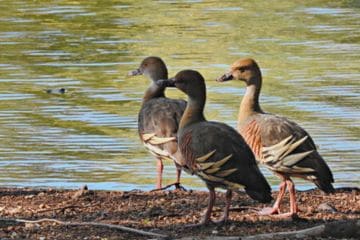
The Invasive Species Council says the suspected detection of H5N1 bird flu in a greater-crested tern at Seal Bay on Kangaroo Island could mean the disease is on the doorstep of one of Australia’s most important sea lion colonies, warning urgent investment is needed in wildlife resilience before more threatened species are put at risk.
The Seal Bay case is one of 11 new suspected cases of H5 bird flu in South Australia, 7 of which are in the south-east and 4 on Kangaroo Island.
The suspected detection at Seal Bay comes just as funding has run out for its feral cat control program around, despite invasive predator control being one of the most effective ways to improve wildlife resilience to emerging threats such as bird flu.
‘The suspected detection of H5N1 bird flu at Seal Bay on Kangaroo Island is deeply concerning because it brings the virus to the doorstep of one of Australia’s most important Australian sea lion colonies,’ James Johnston, Invasive Species Council Senior Advocate said.
‘While this detection is in a greater-crested tern and there is currently no evidence the virus has spread to sea lions, its proximity to such a significant seal colony highlights how quickly this disease is moving through wildlife.
‘This is exactly why we’ve been calling for a $200 million Wildlife Resilience Fund. We can’t stop bird flu reaching every corner of Australia, but we can give our wildlife a much better chance of surviving it.
‘Just last week we were in the media talking about the fact that funding had run out for feral cat management around Seal Bay. Now, just days later, suspected bird flu has arrived at the doorstep of one of Australia’s most important wildlife refuges. It is a stark reminder that we cannot afford to let critical conservation programs lapse just as new threats emerge.
‘A Wildlife Resilience Fund would ensure critical programs like cat management don’t stall at exactly the moment Australia’s wildlife needs them most. We cannot afford to let years of conservation progress unravel because the funding disappears when new threats are emerging.
‘The tragedy unfolding overseas shows exactly what’s at stake. More than 30,000 South American sea lions have died, along with 17,000 southern elephant seal pups. In parts of Argentina, 95 per cent of elephant seal pups died in a single breeding season. Those are the kinds of losses we have to do everything possible to prevent in Australia.’
Media Inquiries: (02) 8006 5004
Related Content