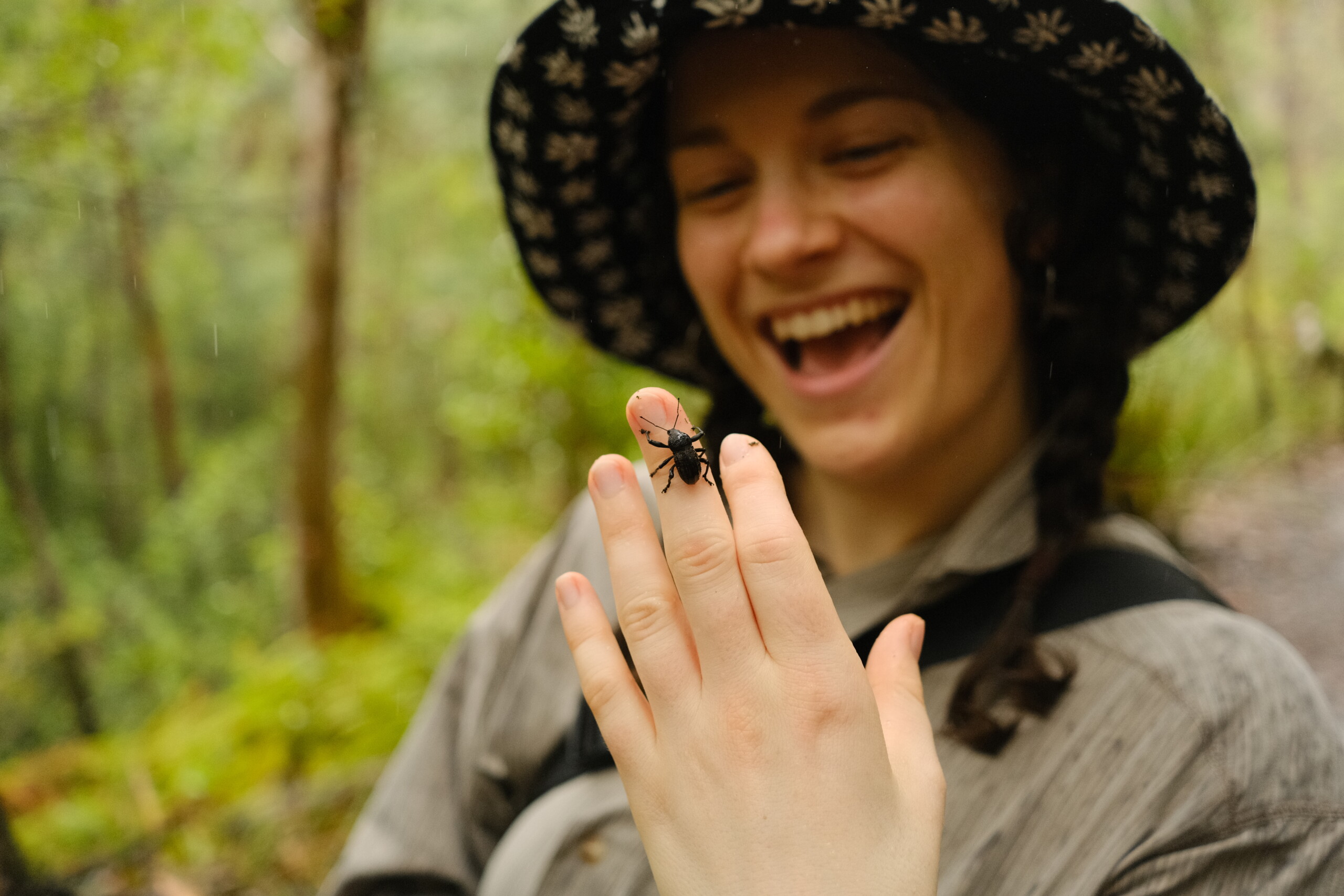
Australians are being urged to step outside, look closer and discover the secret world beneath their feet as Bugs in My Backyard Week returns from 16–22 November 2026.
After more than 5,000 people submitted over 40,000 observations in just seven days last year, the national citizen science event is back, calling on families, schools, gardeners and nature lovers to photograph and record the mini-beasts living all around them.
Bugs in My Backyard Week is part of Bug Hunt, Australia’s national citizen science project, run by the Invasive Species Council and Invertebrates Australia with support from the Australian Government and Australian Geographic.
Every photo uploaded through the free iNaturalist app helps scientists better understand Australia’s hidden biodiversity while strengthening the country’s ability to detect invasive species early.
‘Last year, thousands of Australians got outside and discovered just how much incredible life is hiding in their own backyards,’ Invasive Species Council Citizen Science Coordinator Jess Ward-Jones said.
‘Bug Hunt turns everyday Aussies – kids, parents, teachers and gardeners – into citizen scientists and potentially, biosecurity heroes!
‘All you need is your phone and a bit of curiosity. Every photo you take helps scientists understand and protect Australia’s incredible wildlife – and could even help detect the next invasive pest before it has the chance to spread.
‘Invasive species such as fire ants are threatening to spread further across Australia, putting wildlife, agriculture and our way of life at risk.
‘Whether you’re a nature lover, gardener or just want to get the kids outdoors, you can sign up now at bughunt.org.au and start snapping. Just take a clear photo and upload it through the free iNaturalist app. There’s no need to touch or disturb what you find – a simple photo is all that is needed to help experts in the iNaturalist community.’
Invertebrates Australia’s Citizen Science Coordinator Alison Mellor said:
‘When we look closely, we discover how much life is right under our noses. A lovely Christmas beetle or bogong moth on our windowsill is just as fascinating – and important – as a koala or a kookaburra.
‘Australia’s native invertebrates are wonderful, sometimes bizarre and often brilliantly adapted to their environment – we have peacock spiders that dance, beetles that glow and snails found nowhere else on Earth. Unfortunately, almost 1000 invertebrate species found in Australia are listed as threatened.
‘What most people may not know is that around 70 percent of our native invertebrates remain undescribed by Western science. That’s probably about 200,000 species that people have an opportunity to better understand.
‘Invertebrates make up more than 95 per cent of all animal species on Earth, yet most of Australia’s remain ignored in conservation. That’s an enormous gap in our knowledge about the natural world and how it’s faring.’
Federal Minister for Agriculture, Fisheries and Forestry Julie Collins said:
‘Australians have an important role to play in protecting our unique environment from invasive species, and Bugs in My Backyard Week is a great way for people of all ages to get involved.
‘Last year, more than 5,000 people made over 40,000 observations during Bugs in My Backyard Week – showing the enormous contribution citizen scientists can make when thousands of people across the country are keeping their eyes open.
‘Early detection is one of our strongest defences against invasive species. The sooner a new pest is spotted, the better our chances of containing it before it can spread and cause serious damage to our environment, agriculture and communities.
‘I encourage Australians to get outside this Bugs in My Backyard Week, take a closer look at the tiny creatures around them and help contribute to our understanding and protection of Australia’s biodiversity.’
Australian Geographic Society Chair Chrissie Goldrick said:
‘Bugs in My Backyard Week is a wonderful reminder that nature is all around us, and that even the smallest creatures have fascinating stories to tell.
‘By encouraging Australians to get outside, look closer and share what they find, we can inspire the next generation of nature lovers and citizen scientists, while helping build the knowledge needed to protect Australia’s remarkable wildlife.’
Background:
- In 2025, more than 5,000 people contributed over 40,000 observations during Bugs in My Backyard Week.
- Invasive species are expected to contribute to 75 of Australia’s next 100 extinctions without stronger action.
- Around 1,000 Australian invertebrate species are currently listed as threatened, including bees, butterflies, spiders and snails.
- Only around 30% of Australia’s estimated invertebrate species have been scientifically described, leaving roughly 200,000 species – around 70% – undescribed by Western science.
- Citizen science is one of the most important tools in our biosecurity tool kit. In Queensland citizen scientists account for 70-80% of all fire ant detections.
- ‘Invertebrates’ include insects, beetles, butterflies, snails, spiders, millipedes and worms.
Photo: Hayden Starr.
Related Content