The Invasive Species Council has welcomed Tasmania’s first statewide Invasive Species Action Plan but warned that declining biosecurity funding, a lack of measurable targets and no new investment threaten to undermine its success.
The Tasmanian Government’s new Invasive Species Action Plan 2026–29 brings the management of invasive animals, plants and aquatic pests under one statewide framework for the first time, recognising the growing threat they pose to Tasmania’s unique wildlife, natural landscapes and agricultural industries.
However, the plan contains no new funding commitments, no measurable targets and no commitment to publicly report on progress, raising serious questions about how its ambitions will be delivered.
The concerns come as Tasmania’s biosecurity budget faces significant reductions. According to Tasmanian Budget papers, appropriation for biosecurity falls from $40.9 million in 2024-25 to $32.2 million in 2026-27, and is projected to reach $27.6 million in 2029-30 (after a low of $27.0 million in 2028-29), a reduction of more than $13 million.
‘Tasmania has an extraordinary opportunity to protect wildlife and landscapes that have already been lost or severely degraded elsewhere in Australia. But that window of opportunity is closing,’ Invasive Species Council Conservation Officer Dr Tiana Pirtle said.
‘With threats like bird flu and feral deer growing, cutting biosecurity funding is a step in the wrong direction. We need serious investment, clear targets and accountability to protect Tasmania’s unique wildlife before it’s too late.
‘We welcome the government’s recognition that protecting Tasmania’s precious environment is just as important as protecting its agricultural industries. But a plan without funding, clear targets or public accountability risks becoming little more than words on paper.
‘It’s particularly concerning to see the government committing to stronger border protections at the same time as biosecurity funding is projected to fall by more than $13 million.
‘You cannot strengthen Tasmania’s defences against invasive species while reducing the resources needed to keep them out.’
The Invasive Species Council said the funding reductions were particularly concerning given the loss of specialist public service positions that support invasive species prevention and control, including cuts to Tasmanian Herbarium staffing and the end of the role leading the Tasmanian Wilderness World Heritage Area feral deer control.
The plan also misses key opportunities to prevent new invasive species from establishing, including addressing sleeper populations of feral goats and roaming pigs and the sale and spread of invasive garden plants.
Escaped garden plants are a major source of environmental weeds across Australia, and the federal government has committed to developing a national threat abatement plan to tackle the damage they cause to native wildlife and habitats.
‘Prevention doesn’t stop at Tasmania’s borders. We also need to stop invasive plants being sold, planted and spread into our bushland,’ Dr Pirtle said.
‘The national commitment to tackle escaped garden plants is an obvious opportunity for Tasmania to strengthen prevention, yet the new plan does not clearly address this threat.
‘Stopping a dangerous weed before it spreads is far cheaper and more effective than trying to control it once it’s established.’
Dr Pirtle said another gap was the failure to connect the Invasive Species Action Plan with Tasmania’s Threatened Species Strategy, which is currently being updated.
‘Invasive species are among the greatest threats to Tasmania’s native wildlife, yet the government’s new plan makes no clear connection to its new Threatened Species Strategy.
‘These strategies should work hand in hand, with clear commitments to develop and implement threat abatement plans for major invasive threats and recovery plans for the threatened species most at risk.
‘Tasmania has not developed state threat abatement plans for its key threatening processes, despite this being identified as a priority in its existing Threatened Species Strategy.
‘Without that connection, we risk having one strategy that identifies the problem and another that promises to protect wildlife, but neither delivers the coordinated action needed to prevent extinctions.’
The Invasive Species Council also highlights the importance of prioritising island eradications, which are a proven strategy for success and should be a priority in the Plan.
Media inquiries: (02) 8006 5004
Background:
- The Tasmanian Government released its first statewide Invasive Species Action Plan 2026–29, outlining priorities for preventing, eradicating and managing invasive plants, animals and aquatic pests.
- The plan brings invasive species management under a single statewide framework but contains no new funding commitments, measurable targets or commitment to publicly report on progress.
- According to the 2025-26 and 2026-27 Tasmanian Budget papers, appropriation for Biosecurity and Product Integrity falls from $40.9 million in 2024-25 to $32.2 million in 2026-27, and is projected to reach $27.6 million in 2029-30 (after a low of $27.0 million in 2028-29), a reduction of more than $13 million. The funding reductions include the completion of various programs like the Weeds Action Fund and Additional Biosecurity Officers initiatives and ‘operational efficiencies’.
- The Australian Government committed in 2024 to developing a national threat abatement plan for escaped garden plants, recognising their significant impacts on native wildlife and landscapes.
- Tasmania’s Threatened Species Strategy is currently being updated. The Invasive Species Action Plan does not establish a clear link to the strategy or commit to developing threat abatement and threatened species recovery plans.
- Tasmania has demonstrated the benefits of island eradication programs, including the removal of rats, mice, and rabbits from Macquarie Island and feral cats from Three Hummock Island and Little Dog Island, but the new plan does not establish targets for future island eradications.
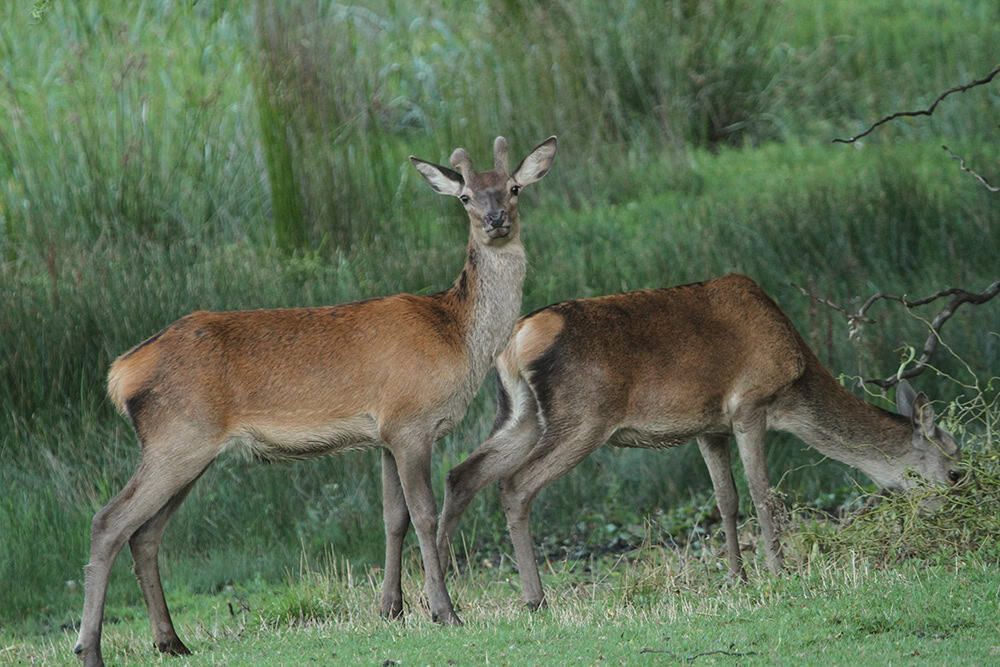
Photo: Faye Beswick.
Related Content