As many of us wind down for the weekend, agriculture ministers from across the country will sit down this Friday for a meeting that will decide the future of Australia’s fight against fire ants.
Funding for the national fire ant eradication program runs out in June next year. With just nine months left, the decisions made around that table will set the tone for whether governments commit to the long-term funding needed to finish the job – or once again allow funding uncertainty to put eradication at risk.
The stakes are enormous.
After more than two decades fighting one of the world’s worst invasive pests, Australia is finally starting to reduce the fire ant infestation area.
Fire ant numbers have fallen sharply in heavily treated areas – by as much as 86%. For the first time in years, eradication treatments are moving inward towards the core infestation, with 208,000 hectares recently moving from suppression towards active eradication – an almost the size of the ACT.
But we have also seen exactly what happens when governments take their foot off the pedal.
Five years ago, experts warned that the national eradication program needed at least $200 million a year to stay ahead of the invasion. Governments failed to provide it.
By 2023, just $60 million was committed for that financial year. The infestation subsequently grew by more than 40 per cent, from around 600,000 to 850,000 hectares.
Fire ants breached containment repeatedly. They reached New South Wales, jumped west of the Great Dividing Range and were intercepted after being transported to Western Australia, Victoria and Tasmania.
We have spent the years since paying to recover the ground we lost.
That experience should be front of mind for every minister sitting around the table on Friday.
Underfunding eradication did not save taxpayers money. It allowed the invasion to grow, leaving governments with more nests to destroy, more land to treat, more freight pathways to monitor and a much bigger bill.
We cannot make the same mistake twice.
If fire ants become permanently established, the consequences will be felt across the country. Almost all of Australia is climatically suitable for them.
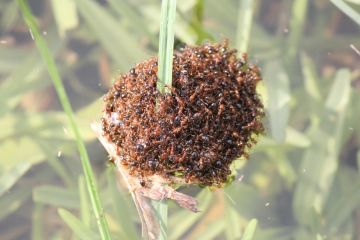
They attack wildlife, pets and livestock, damage crops and infrastructure and can make parks, sporting fields and backyards unsafe. Overseas, people have died following fire ant stings.
An uncontrolled fire ant invasion is expected to cost Australia more than $2 billion every year.
At a time when governments are looking for savings and money is being clawed out of invasive species programs, fire ants are a powerful reminder that cutting investment in invasive species does not make the cost disappear.
Invasive species do not wait for the next budget. Stop controlling them and they spread. Delay eradication and the area you need to treat grows. Save money today and taxpayers can be left paying far more tomorrow.
Australians understand that.
Almost 80 per cent support fire ant eradication, while Queenslanders are currently checking for fire ants at 13 times the usual rate. Community surveillance has already helped uncover dangerous outlying infestations.
Every Australian government has a stake in this program because every Australian government will bear the consequences if eradication fails.
The public is doing its part.
On Friday, agriculture ministers need to do theirs.
Invasive Species Council Advocacy Director, Reece Pianta
Related Content