Queenslanders are checking for fire ants at 13 times the usual rate, demonstrating strong community backing for eradication efforts as Australian governments remain yet to commit funding beyond June 2027.
The surge in community reports comes as the national fire ant eradication program is finally making important progress after years of setbacks, with fire ant numbers falling sharply in treated areas and 208,000 hectares recently moving from suppression towards active eradication.
The Invasive Species Council said more eyes on the ground gives authorities a much better chance of finding fire ants early, but community vigilance needs to be matched by long-term funding commitments from the Commonwealth and every state and territory government.
‘Queenslanders are doing exactly what we need them to do, but if national fire ant eradication funding runs out in June 2027, all that effort will have been for nothing,’ Reece Pianta, Invasive Species Council Advocacy Director said.
‘Fire ants can turn up in backyards, paddocks, parks and worksites. Government officers simply cannot be everywhere, so having thousands of Queenslanders keeping an eye out is an incredibly important part of eradication.
‘Community surveillance has already helped uncover dangerous outlying infestations, including at Murwillumbah in NSW, Oakey, Toowoomba and central Queensland.
‘The community is doing its part. Now governments need to do theirs.
‘Our opinion research shows close to 80 per cent support for fire ant eradication. Australians want this pest eradicated and governments should back that support by urgently committing the funding needed for the next phase of the program.
‘Every Australian government has a stake in this. If we fail to eradicate fire ants, they could spread to almost every part of Australia where people and animals live, devastate wildlife and cost our economy more than $2 billion every year.
‘We only need to look overseas to see what a fire ant future could mean. In the United States, fire ants have caused deaths and hospitalisations this year, while infestations can slash cattle farming productivity by up to 40 per cent.
‘The last time fire ant eradication faced a funding gap, the infestation spread by around 40 per cent. We cannot make that mistake again.
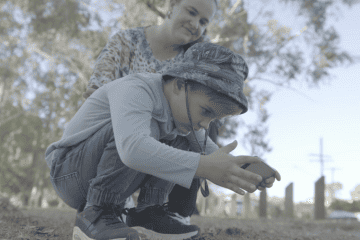
‘We need Queenslanders to keep looking. Check your backyard, your paddock or your workplace, know what a fire ant nest looks like and report anything suspicious. Every report could help stop the next infestation before it spreads.’
Media inquiries: (02) 8006 5004
Background
- Fire ants can be lethal to humans, are expected to have a $2 billion per year impact on Australia’s economy if they get out of control, will devastate wildlife, cut agricultural output by up to 40% and may cause over one hundred thousand extra medical appointments each year.
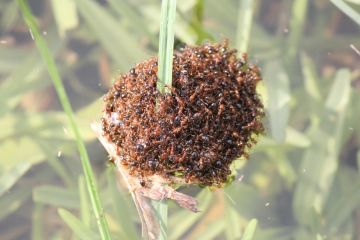
- Fire ants can form rafts during flood events, stowaway in freight or soil or spread by Queen ant flights of around 5 km per year (and up to 30 km in favourable conditions).
- The National Red Imported Fire Ant Eradication Program strategic review estimated that at least $200 to $300 million per year will be required for ongoing eradication efforts to achieve eradication by 2032 – this compares to $94 million spent in 2022/23 and only $60 million committed for this financial year.
- Recently, Australia’s governments committed to ongoing fire ant eradication but have not yet committed any new funding to fight fire ants in Australia. Fire ant eradication is being led by the Queensland government but is funded by all Australian governments because fire ants are a threat to the whole country.
- Fire ants came into Australia in the late 90s in freight from the United States, they were found in 2001. Fire ants are originally from South America.
- Fire ants have spread across most of the southern United States, and are spreading in China at a rate of about 80 km per year.
- Almost all of Australia is climatically suitable for fire ants.
- A comprehensive government study from 2021 found that between $200 and $300 million annually would be required over the next 10 years or Australia would face at least a $2 billion cost per year from fire ants forever. At the moment the planned funding is only half that amount.
Related Content