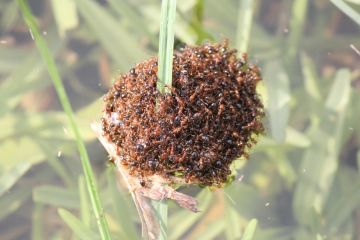
The Invasive Species Council has welcomed a united commitment from Australia’s agriculture ministers to keep fire ant eradication on the table, saying the next critical test is whether state, territory and federal treasurers will fund the plan.
Agriculture ministers from across Australia met on Friday to consider the National Red Imported Fire Ant Eradication Program Response Plan 2027–32, the next phase of the national eradication effort after current funding expires in June next year.
During the meeting, ministers acknowledged the enormous impacts fire ants would have if allowed to spread and agreed that eradication remains technically feasible, cost beneficial and in the national interest.
Importantly, ministers also recognised the risks of any eradication funding gap and agreed to seek funding in the coming 2027–28 Budget.
‘This is a significant show of unity from agriculture ministers across the country. They have agreed on the fundamentals – fire ants can still be eradicated, eradication is in the national interest and we cannot afford another funding gap,’ said Invasive Species Council Advocacy Director Reece Pianta.
‘Agriculture ministers have done their job. Now it is time for treasurers and premiers to step up and fund the plan.
‘The science is clear, the plan is there and, after more than two decades fighting fire ants, the program is finally turning the tide on this infestation.
‘We cannot allow that progress to be squandered because governments hesitate when it comes time to put money on the table.
‘The last time governments delayed funding the eradication program, the infestation spread by around 40 per cent. Australia cannot afford to make that mistake again.
‘Fire ants might currently be concentrated in south-east Queensland, but this is not Queensland’s problem to solve alone. Almost all of Australia is climatically suitable for fire ants and the consequences of allowing them to spread would be felt across our environment, agriculture, health and way of life.
‘Every state and territory benefits from keeping fire ants contained and driving them towards eradication, which is why every government has a responsibility to help fund the national response.
‘There has been real progress on the ground. Fire ant densities have been driven down dramatically in heavily treated areas, the program has begun pushing the infestation boundary inward and dangerous outlier infestations have been successfully eradicated.
‘For the first time in years eradication is back on track. This is exactly the wrong moment to take our foot off the pedal.
‘Agriculture ministers have sent a clear message that eradication remains possible and nationally important. Now we need treasurers around the country to back that commitment with the funding needed to finish the job.
‘Australia has a choice: invest now to get rid of fire ants, or condemn future generations to paying for them forever.’
Media inquiries: (02) 8006 5004
Background:
- The current national fire ant eradication program is funded until June 2027. The proposed Response Plan 2027–32 would continue the eradication effort over the following five years, subject to funding commitments from Australian, state and territory governments.
Related Content