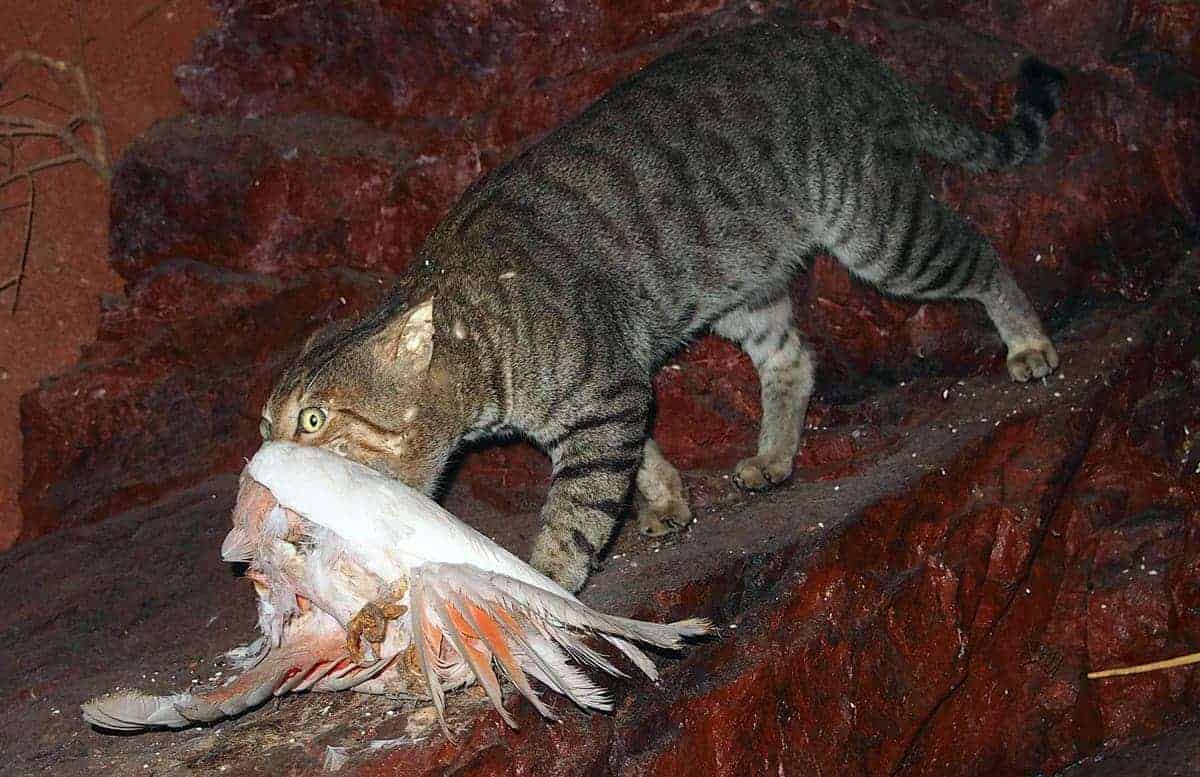
New DNA analysis has revealed feral cats are eating significantly more native mammals than traditional methods have detected. The Invasive Species Council says the findings reinforce the urgent need for governments to accelerate feral cat control across Australia.
The study compared traditional methods of analysing feral cat diets with DNA metabarcoding and found the newer technique detected mammal remains in 75% of samples, compared with just 43% using conventional methods, suggesting previous studies have substantially underestimated how often feral cats prey on native mammals.
‘Feral cats were already recognised as one of Australia’s most destructive invasive predators. This research suggests the reality is even worse than we thought,’ Invasive Species Council Chief Conservation Officer Tiana Pirtle said.
‘For decades we’ve relied on techniques that miss many of the animals cats are actually eating. DNA technology is giving us a much clearer picture of the true scale of the damage.
‘Feral cats are estimated to kill more than 1.5 billion native animals every year and threaten more than 200 nationally listed threatened species. This research suggests the true toll may be even greater than we’ve been able to measure.
‘The science keeps getting clearer, but our response hasn’t kept pace. Governments need to match the scale of this crisis with sustained, coordinated investment in feral cat control.
‘Keeping cats safely at home also gives native bird populations a better chance of withstanding the additional pressure bird flu will bring. It’s one practical step governments can take right now to improve wildlife resilience.
‘Island eradications are among the most effective conservation investments we can make and are delivering remarkable results in places like Kangaroo Island. Expanding those efforts alongside coordinated mainland control gives many threatened species a genuine chance of survival against one of our biggest extinction drivers.’
Media inquiries: (02) 8006 5004
Related Content