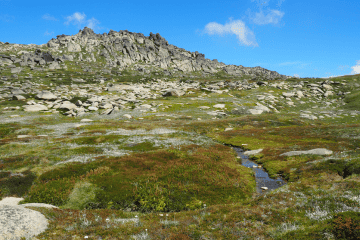
If you listened to a small group of pro-brumby activists and the handful of politicians amplifying them this week, you’d think the biggest threat facing Kosciuszko National Park was the NSW government – not the thousands of feral horses damaging one of Australia’s most unique and fragile environments.
No, apparently the real problem is that park managers are finally doing the job taxpayers expect them to do: protecting a national park.
I suspect the species on the brink of extinction, like the mountain pygmy-possum and southern corroboree frog, or the alpine wetlands being trampled under hooves might see things differently.
But what’s truly remarkable is how detached this debate has become from the reality on the ground.
The members whose electorates actually cover Kosciuszko National Park and the rivers that flow from it – from Labor, Liberal and conservative independent ranks – all support reducing feral horse numbers and protecting the headwaters of the Murray and Murrumbidgee rivers. They understand what local communities, farmers, scientists and park managers understand: feral horses, pigs and deer are causing serious damage and action is needed.
The overwhelming scientific consensus supports reducing horse numbers. So do many of Australia’s leading institutions, including the RSPCA, the Australian Academy of Science and a long list of conservation and animal welfare experts who recognise that professionally conducted aerial shooting is the most humane, effective and targeted way to reduce feral horse populations at the scale required. Just as it is for pigs and feral deer.
Yet somehow, a tiny but highly vocal minority has managed to dominate the conversation.
For all the noise, their support remains remarkably shallow. While overseas online campaigns can generate hundreds of thousands of clicks from people who have never set foot in Kosciuszko National Park, campaigns seeking genuine support from Australians struggle to attract even a fraction of those numbers.
It’s a bizarre debate when you stop and think about it. A national park is being damaged by an invasive species and the controversy is about whether we should stop it.
But this debate is about much more than horses.
If governments become too frightened to act whenever a noisy activist campaign appears, every invasive species program in Australia becomes vulnerable. Today it’s horses. Tomorrow it’s deer. Then it’s pigs. Then rabbits. That is a dangerous precedent for wildlife, agriculture, water security and environmental protection across the country.
No one likes killing feral horses. But governments have a responsibility to protect the native species and landscapes that national parks were created to conserve. Science has repeatedly shown that aerial control is the only practical, humane and effective tool available to achieve that outcome at the scale required.
I can’t help but see two glaring ironies in this debate.
The first is that many of the groups now claiming to be saving horses spent years opposing effective population control. They lobbied politicians, delayed action, spread misinformation, threatened the lives of park staff and local people, and turned a straightforward environmental management issue into a political circus.
And what was the result? More horses. More environmental damage. And ultimately, more horses needing to be removed.
The second irony is hearing some of the loudest voices wrap themselves in the Australian flag while campaigning against the protection of things that are genuinely unique to Australia. Horses exist all over the world. Kosciuszko’s alpine wetlands, native species and high-country ecosystems do not.
If we’re talking about Australian heritage, surely the species and landscapes that evolved here deserve more attention than an introduced feral animal.
National parks were not created to preserve invasive animals, but they were created to protect what makes this country unique and great.
The people fighting to save every horse should ask themselves a simple question: How many native species are they willing to lose to do it?
Jack Gough, Invasive Species Council CEO
Related Content