The Invasive Species Council is calling for an urgent independent review of Australia’s biosecurity surveillance system after learning a major Sydney freight terminal where fire ants may have been undetected for 12 months or more was fully compliant with Commonwealth requirements.
The council has written to federal Minister for Agriculture Julie Collins and Inspector-General of Biosecurity Dr Melissa McEwen asking them to urgently review the Enfield Intermodal Logistics Centre incursion and whether surveillance gaps exist at freight-handling facilities around Australia.
The Council has been advised by the Commonwealth and NSW government that:
- lures at the business where the fire ant nest was found had not been checked since 2023
- the business was only required to check the lures every three years
- checking on other parts of the 30-hectare Enfield site had not occurred since January 2026
- the other three businesses operating under Commonwealth approved arrangements at Enfield were only required to check lures every 12 months.
Concerningly, under the current Commonwealth risk-based system, Enfield was rated medium risk, all checking required under the approved arrangements had occurred and the site was compliant.
‘The current biosecurity arrangements clearly do not reflect biological reality and they need to be urgently changed,’ Invasive Species Council Advocacy Director Reece Pianta said.
‘Checking for fire ants once every three years makes no sense when a colony can reach reproductive maturity in around six months. Even a 12-month interval could allow a colony to mature and spread before anyone comes looking for it.
‘And that’s assuming the ants are picked up at the first surveillance check. On this schedule, if they are missed it could be 2 years or more before a colony is detected.
‘It is alarming that the biosecurity system at Enfield was working as designed, yet a mature fire ant nest was still able to go undetected for so long.
‘If a major freight terminal can meet every surveillance requirement and still allow a mature fire ant nest to go undetected, then it raises serious questions about whether the surveillance arrangements themselves are fit for purpose.
‘Around 80,000 containers leave the 30 hectare Enfield site every year, with much of that freight coming directly from international arrival points before moving across NSW and interstate. Yet we understand this site is only classified as medium risk. This discovery demonstrates that that rating does not reflect the real biosecurity risk.’
‘We are pleased that we have been advised that an internal departmental review of the Enfield site will occur, but a limited review will not answer the bigger question of whether the system is working across Australia.
‘We need the Inspector-General to independently examine Enfield, whether previous recommendations have been properly implemented and whether risk ratings and surveillance requirements at similar intermodal freight terminals around Australia are adequate.
‘We are also seeking answers about why the public was not told about this new overseas incursion until 18 to 19 days after it was confirmed, and why there is not a standard public notification process for serious biosecurity detections.
‘Australia has invested hundreds of millions of dollars trying to eradicate fire ants. We cannot have a surveillance system at our freight gateways that allows a dangerous invasive species to reproduce and potentially spread while everyone is technically following the rules.’
Media inquiries: (02) 8006 5004
Background:
- The Inspector-General has previously raised concerns about the system governing approved arrangements. A 2019 review found limited or occasional regulatory oversight and recommended unannounced, risk-based audits and year-round compliance oversight. A separate 2018 review warned that increasing rail movements from ports to intermodal hubs around Sydney and Melbourne increased the risk of contaminated containers spreading hitchhiker pests.
- A 2025 Inspector-General review found two recommendations from the 2019 review remained open and identified persistent weaknesses in how recommendations were implemented.
- Fire ant colonies can reach reproductive maturity at around six months, meaning a 12-month checking interval could allow a colony to mature and spread before it is detected, while a three-year interval could allow repeated rounds of spread.
- Fire ants can be lethal to humans, are expected to have a $2 billion per year impact on Australia’s economy if they get out of control, will devastate wildlife, cut agricultural output by up to 40% and may cause over one hundred thousand extra medical appointments each year.
- Red imported fire ants could cause 650,000 additional medical appointments every year if they are allowed to spread unchecked across Australia.
- Anaphylactic reactions to fire ant stings are nearly three times more likely than common stinging insects like bees.
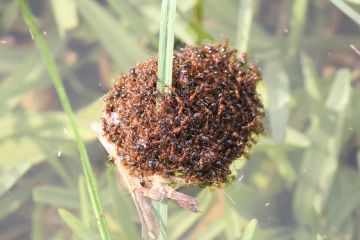
- Fire ants can form rafts during flood events, stowaway in freight or soil or spread by Queen ant flights of around 5 km per year (and up to 30 km in favourable conditions).
- Fire ant colonies can reproduce after at least six months. These reproduction events can infest freight and this has been a cause of detections, including those in the Northern Rivers region.
- The current national fire ant eradication program is funded until June 2027.
- Recently agriculture ministers from across the country made a united commitment to keep fire ant eradication on the table, saying the next critical test is whether state, territory and federal treasurers will fund the plan.
- A proposed Response Plan 2027–32 would continue the eradication effort over the following five years, subject to funding commitments from Australian, state and territory governments.
- More than 95% of Australia is suitable for fire ant infestation.
Related Content