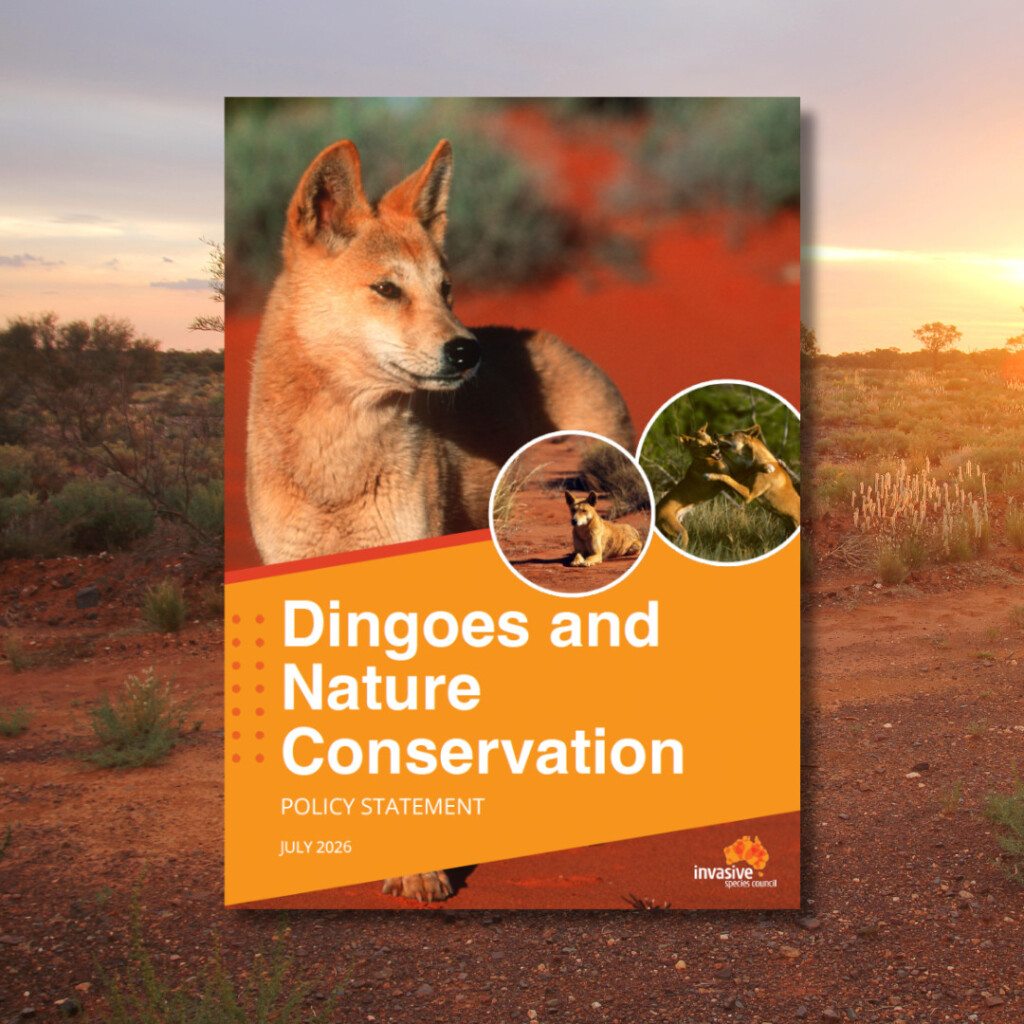
Dingo ancestors probably originated in southern China, where human and dog populations expanded with the development of agriculture. Dingoes diverged from their most recent common ancestor about 6,800 years ago, and a bone in a cave on the Nullarbor Plain, the oldest reliably dated subfossil, indicates they were widespread in Australia by 3,300 years ago.
They may have been brought here by the sea-faring Tolean people from southern Sulawesi (one of several hypotheses), and are likely to have spread rapidly in association with First Australians.
The arrival of a new predator in Australia was ecologically momentous.
Dingoes likely caused or contributed to the extinction of at least 3 species on the mainland soon after their arrival – the thylacine, Tasmanian devil and Tasmanian native hen.
As an apex predator similar in size to the thylacine, the dingo became an ecological force – able to ‘shape ecological assemblages via a multitude of interaction pathways’.
Related Content