


The Invasive Species Council has applauded the South Australian government’s $800,000 commitment to continue the Dudley Peninsula Feral Cat Eradication Program on Kangaroo Island, announced today, calling it a critical step toward securing one of Australia’s most important conservation opportunities.
The new funding builds on $1.5 million secured from the Australian Government last year to extend the program and maintain momentum toward removing feral cats from the eastern end of the island.
However, a further $3.1 million is still required from the Commonwealth to fully complete the eradication and deliver what would be the largest feral cat eradication ever undertaken on an inhabited island anywhere in the world.
‘Kangaroo Island is one of Australia’s greatest conservation assets, and this $800,000 commitment from the State Government shows real leadership in securing its future,’ Invasive Species Council CEO Jack Gough said.
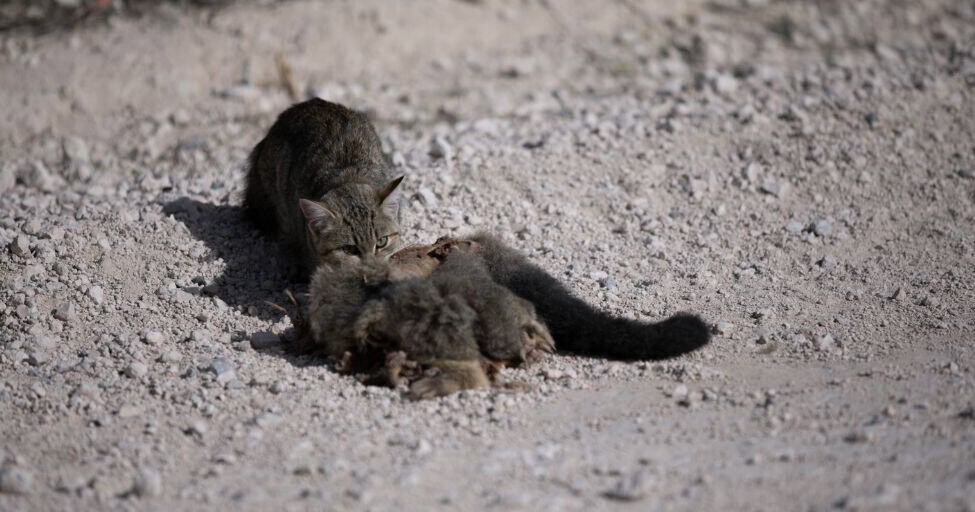
‘Feral cats are the biggest driver of animal extinction in Australia and seriously threaten the island’s wildlife, including the critically endangered Kangaroo Island dunnart and vulnerable little penguin colonies.
‘Backing this eradication program is backing the survival of species found nowhere else on Earth – and proving that extinction is not inevitable when governments act decisively.
‘With $3.1 million still required to finish the job, we now look to the Australian Government to step up and secure what would be the largest feral cat eradication ever completed on an inhabited island anywhere in the world – placing South Australia at the forefront of one of the most significant conservation achievements in our nation’s history.
‘This is a really important commitment from the Labor South Australian government and we look forward to working with the government to make sure that the wildlife can benefit from a fully funded eradication program.’
Media inquiries: (02) 8006 5004
Photos and maps to accompany this story are available here.
Background:
- Kangaroo Island is internationally renowned for its biodiversity, agriculture, and tourism, contributing $200 million annually to nature-based tourism and $150 million to sheep production pre-bushfires.
- Its unique ecosystems support threatened species such as the Southern Brown Bandicoot, Kangaroo Island Echidna, and Western Whipbird. Feral cats are their primary threat, causing catastrophic declines in native species and spreading diseases like toxoplasmosis, which also impacts agriculture.
- Feral cats are the apex predator on Kangaroo Island.
- Feral cats are known to predate on over 50 native species on Kangaroo Island.
- Cats are hosts to diseases and parasites that place the endangered Australian sea lion at increased risk of extinction.
- 85 percent of the sea lion population occurs in South Australia, with the 3 largest breeding colonies found at Dangerous Reef, The Pages and Seal Bay on Kangaroo Island.
- Sea lion populations have plummeted by over 60 per cent in the past 4 decades.
Related Content