Deer-related car crashes in Tasmania have surged by more than 160 per cent in five years, with insurance claims costs rising by more than 330 per cent – prompting fresh calls for urgent action to rein in the state’s booming feral deer population.
New data from the Royal Automobile Club of Tasmania (RACT) reveals 122 deer-related insurance claims between 2021 and 2025, costing nearly $800,000 in repairs.
‘RACT’s data is just the tip of the iceberg. When you factor in other insurers, third-party policies and commercial vehicles, deer are likely costing Tasmanian motorists well over $1 million every year,’ Invasive Species Council Conservation Officer Dr Tiana Pirtle said.
‘Tasmania’s deer population has increased by around 33 per cent over the past five years. The rise in crashes is tracking that growth – but the financial impact is accelerating even faster.
‘Deer are large, unpredictable animals. When a full-grown stag collides with a vehicle at highway speeds, the consequences can be catastrophic.
‘This is a community safety issue and it is the government’s responsibility to ensure that all Tasmanians can travel safely.
‘One Tasmanian driver I spoke to recently had their vehicle completely written off after striking a deer at night.
‘We have the tools, the expertise and the evidence to get Tasmania’s deer numbers down, what we need now is sustained political will and investment into the professional, coordinated control programs that work.
‘The Tasmanian government must lift all restrictions on deer control and declare them a feral species, in line with most other jurisdictions.
The Invasive Species Council said the state government should also prioritise eradicating deer from Bruny and King Islands, and the Tasman and Freycinet Peninsula.
‘These are essential steps to tackle the state’s growing deer problem.’
Media inquiries: (02) 8006 5004
Photos available here.
Background:
RACT data shows deer-related incidents rising sharply:
- 2021: 16 claims
- 2022: 12 claims
- 2023: 26 claims
- 2024: 26 claims
- 2025: 42 claims
That represents a 162.5 per cent increase in reported incidents since 2021.
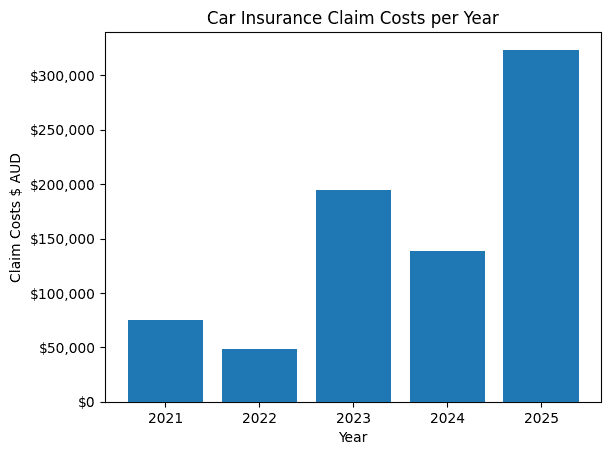
Insurance costs have risen even faster:
- 2021: $74,779
- 2022: $48,816
- 2023: $194,182
- 2024: $138,863
- 2025: $323,576
Total claim costs in 2025 were more than four times higher than in 2021.
- Feral deer numbers have surged across Tasmania. Within the 2019 survey area, the population grew from an estimated 53,660 deer (±19%) in 2019 to 71,655 deer (±19.6%) in 2024 – an increase of 33.6% in just five years, equivalent to roughly 6% growth per year.
- The majority of feral deer are in the Midlands, but satellite populations have spread to the Tasman and Freycinet peninsulas, Bruny and King islands, around Hobart, Launceston, and in the northwest.
- According to TasFarmers, the current feral deer population has a direct farmgate value impact to the state’s producers of $41 million annually.
- Feral deer are a major risk on the road with large males weighing upwards of 80kg.
- There is one species in Tasmania – fallow deer. They were introduced as a hunting resource in the 1800’s, and through escapes from deer farms.
- Feral deer remain legally protected in Tasmania as a game resource under the Wildlife (General) Regulations 2010. Tasmania and Victoria are the only states that continue to treat feral deer as a hunting resource instead of managing them as an invasive species.
Related Content