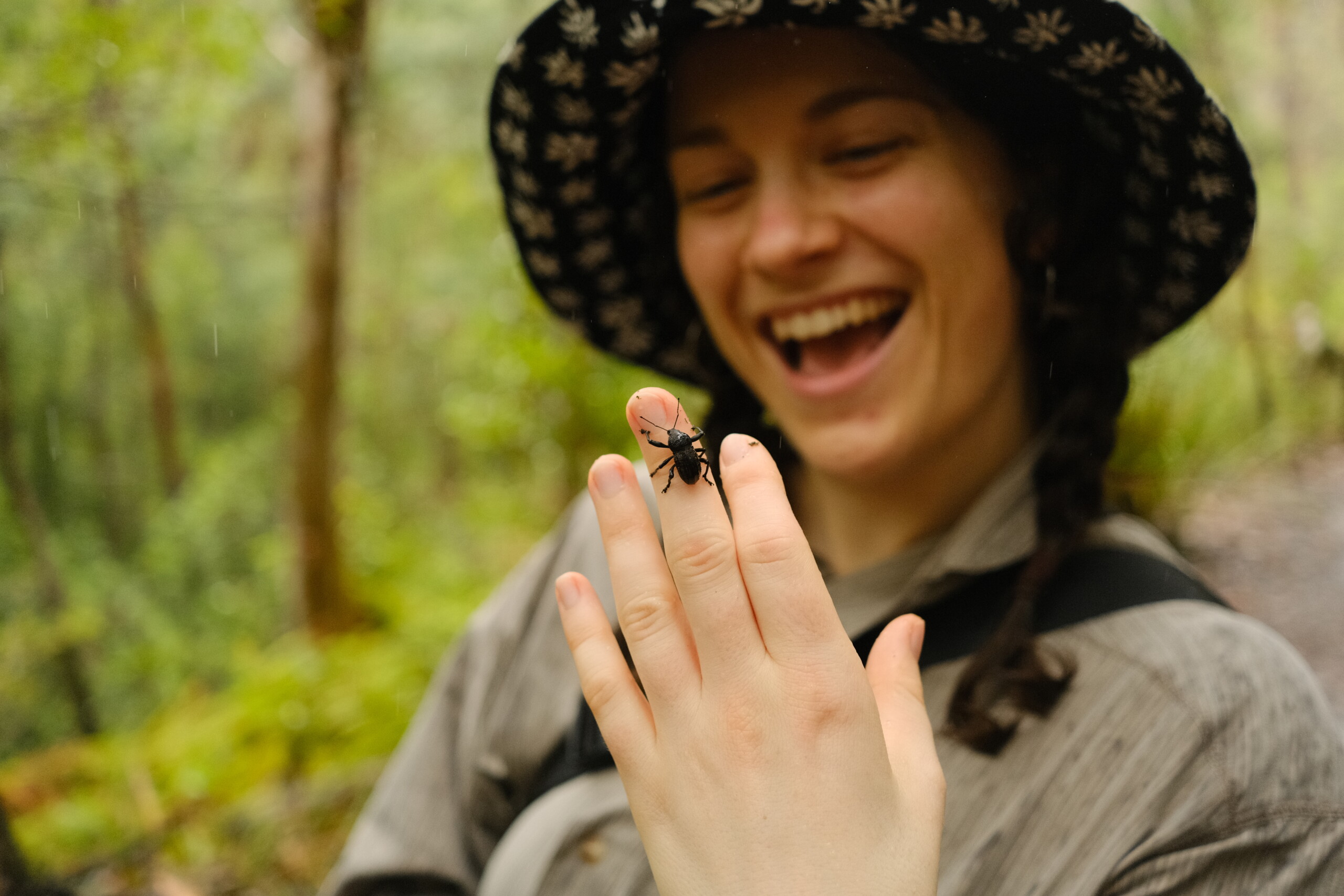
You might think of the bugs in your backyard – or the intruders in your home – as pests. But for Australia’s native insects, they are vital workers, playing an essential role in pollination, nutrient cycling and natural pest control.
New global research, the first of its kind, has confirmed what scientists and conservationists have long feared: invasive animals and plants are driving dramatic declines in insect populations worldwide.
The study found terrestrial insect abundance has dropped by around 31 per cent, while species richness has fallen by 26 per cent in areas affected by invasive species. Groups such as bees and ants are among the hardest hit – undermining the natural systems that support healthy landscapes, wildlife and productive agriculture.
‘Insects are the backbone of nature – they pollinate crops, recycle nutrients and keep ecosystems functioning – and this research shows invasive species are hollowing out that foundation,’ Invasive Species Council Citizen Science Coordinator Jess Ward-Jones said.
‘This is exactly what we’re trying to highlight through our national Bug Hunt citizen science program, delivered in partnership with Invertebrates Australia and Australian Geographic.
‘Bug Hunt encourages everyday Australians to look, snap and report the insects they see in their backyard, garden, schoolyard or local bushland using iNaturalist.
‘Those observations provide critical information to scientists about how our native insects are doing, and they help us spot invasive species early – before they spread and cause more damage.
‘Most people don’t realise how powerful their observations can be – a single photo can help scientists track declines, understand pressures and identify new threats.
‘The good news is people can be part of the solution by learning what’s around them, reporting what they see, and supporting stronger action to stop invasive species.
‘Protecting insects means protecting the systems we all rely on, and Bug Hunt is a simple way for Australians to help do that.’
Media inquiries: (02) 8006 5004
Photos and images available here.
Related Content